Process
Why we write the brief with the client, in the same room
Most briefs arrive as a document. Ours leave as one, after a half-day session where the client and the studio write it together. Here is how that session runs.
 Ruth Achterberg, Strategy and studio director4 min read
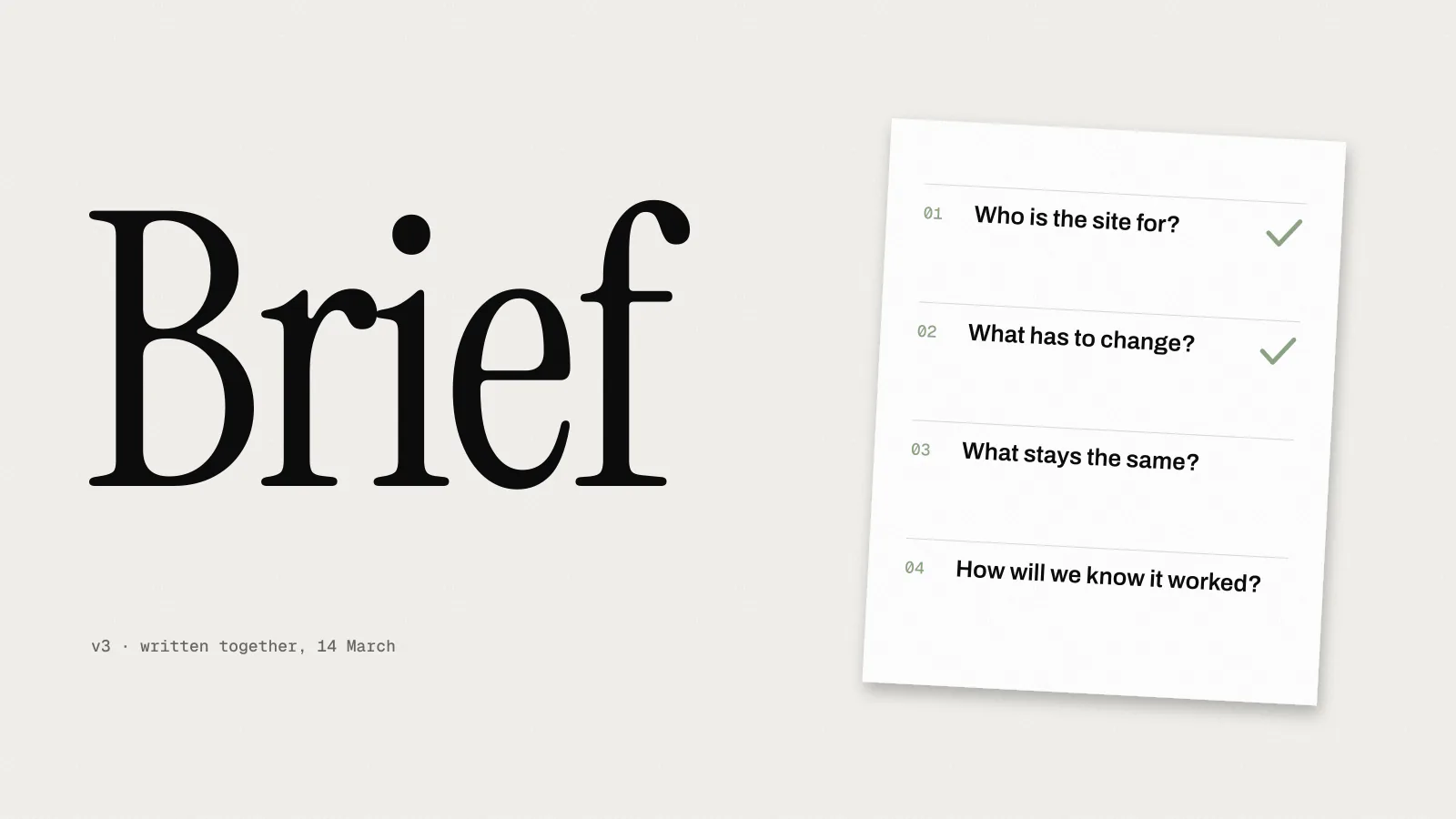
Most of the briefs we receive are well meant and slightly wrong. They’re written by one person, usually under time pressure, and they describe the thing the client thinks they need: a new logo, a new website, an app. What they rarely describe is the problem that made someone pick up the phone.
For the last four years we’ve stopped treating the incoming brief as the brief. We treat it as a first draft, and we write the real one together with the client in a single half-day session. This post is about how that session works and why we think it pays for itself.
What we ask for before the session
We ask for three things a week ahead. None of them are long.
- The original brief, however rough. A forwarded email is fine.
- Who decides. The names of the people who will approve the work, and the one person who can say yes when they disagree.
- Something that didn’t work. A previous project, a competitor’s site, a sign they hate. Things people dislike tell us more than their mood boards do.
We also ask for numbers if they have them: sales, calls to a helpdesk, print runs, anything that will tell us later whether the work did its job. If there are no numbers, that’s useful to know too.
The session itself
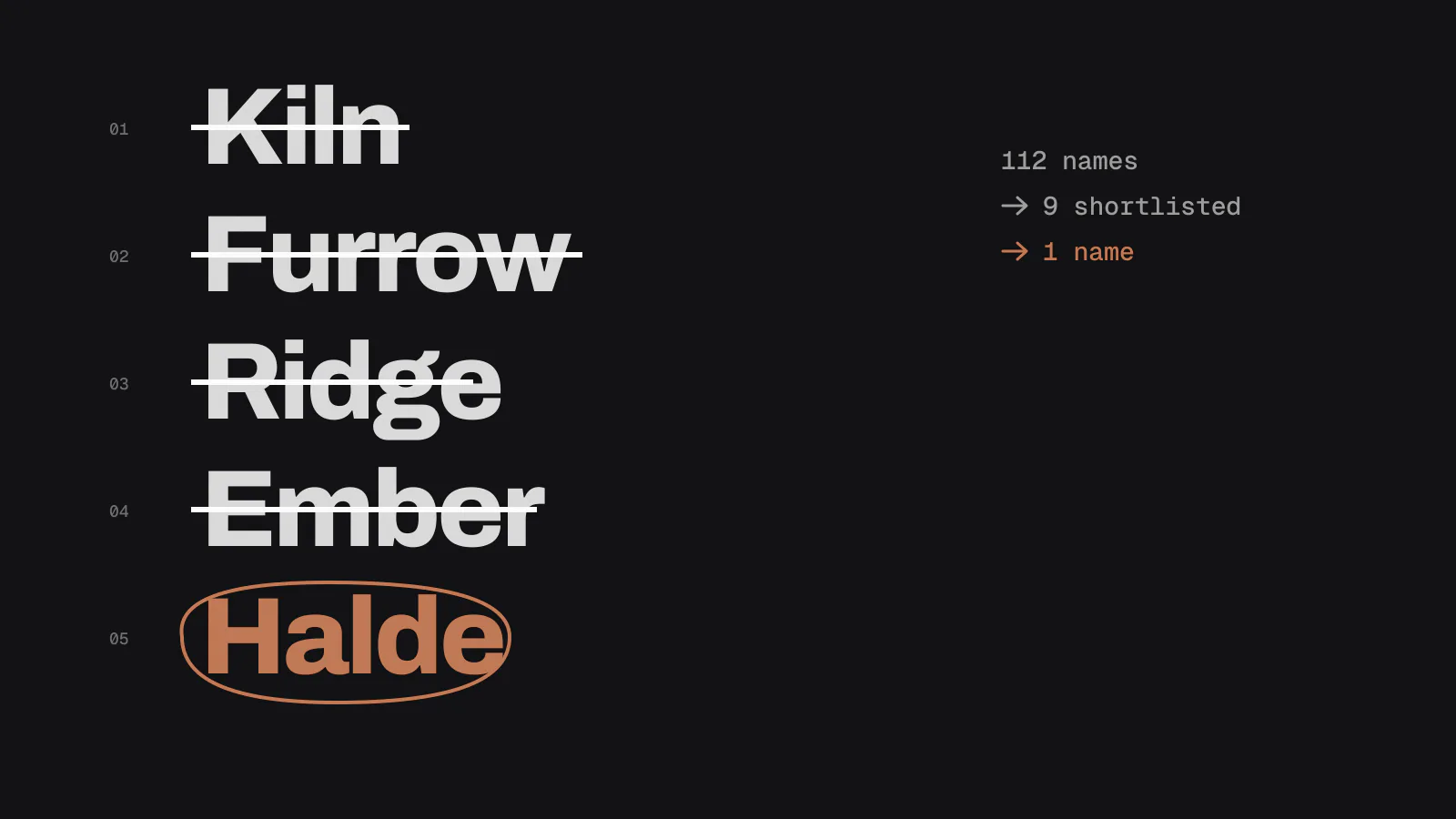
We book four hours, usually at the client’s office or workshop rather than ours. Being in their space matters. At Halde we wrote the brief at a table in the roastery, and halfway through we watched the team pack a batch of bags. That twenty minutes changed the packaging brief more than anything anyone had written down.
The session has four parts, each about an hour.
What’s happening now
We start with the present, not the future. What do people do today, where does it go wrong, and how do they know? We write everything on large sheets on the wall, in the client’s words. If someone says “customers are confused”, we ask what a confused customer actually does. Do they phone? Leave? Buy the wrong thing?
What would be different
Then we ask what would be true in a year if the project worked. We push for things you could observe. “A stronger brand” isn’t observable. “Architects stop asking whether we’re the same company as the one in Belgium” is.
What’s fixed
Every project has constraints that aren’t negotiable, and it’s much better to hear them in week one than in week eight. Budget, launch dates, a printer under contract, a CMS the IT team won’t replace. We list them and mark which ones are truly fixed and which are just habits.
Writing it down
The last hour is the brief itself. We write it on screen with everyone watching, one paragraph at a time, and we don’t leave until the decider has read it and agreed. It’s rarely longer than a page.
A brief that the client wrote with us is one they will defend later, when the work is in front of their board and somebody asks why the logo isn’t blue.
What goes in the brief
The finished brief has the same headings every time:
- The problem, in two or three sentences
- Who it’s for, described by what they do rather than by demographic
- What success looks like, with at least one thing we can measure
- What’s fixed: budget, dates, technical and legal constraints
- What’s out of scope
- Who decides, and how
Point five is the one people skip, and it’s the one that saves the most arguments. Writing “this project doesn’t include a new website” on day one makes it easy to talk about later, when someone inevitably asks for one.
What it costs and what it saves
The session is half a day for two of us, plus a day to tidy up the notes. We charge for it as the first part of every project, and we’ve done it as a standalone piece of work for a few clients who weren’t sure what they needed yet. Two of those decided not to go ahead with a project at all, which we count as a good outcome for everyone.
What it saves is harder to put a number on, but we’ve tried. Comparing projects from before and after we started, rounds of revision on first concepts fell from an average of three to under two. More usefully, we haven’t had a project since 2022 where the client said, after seeing the first concepts, that we’d misunderstood the job.
When it doesn’t work
It works less well when the decider can’t attend. We’ve learned to move the session rather than run it without them. A brief agreed by everyone except the person who signs it isn’t agreed.
It also doesn’t suit very small projects, where a phone call and a page of notes do the same job. For a set of shop signs or a single poster we skip the session and send a one-page brief by email for the client to correct. The principle is the same either way: the brief we work from is one the client has read, changed and agreed.