Studio
How we price a brand project
Fixed fees per phase, a day rate behind every estimate, and why we tell clients our numbers up front. The way Corvel prices identity work, with the figures.
 Ruth Achterberg, Strategy and studio director4 min read
Clients often ask what an identity costs before they’ve told us anything about the project. It’s a reasonable question, and the honest answer, “it depends”, isn’t much help to anyone. So this post sets out how we actually price brand work, with real figures. They will date, but the method shouldn’t.
The day rate behind everything
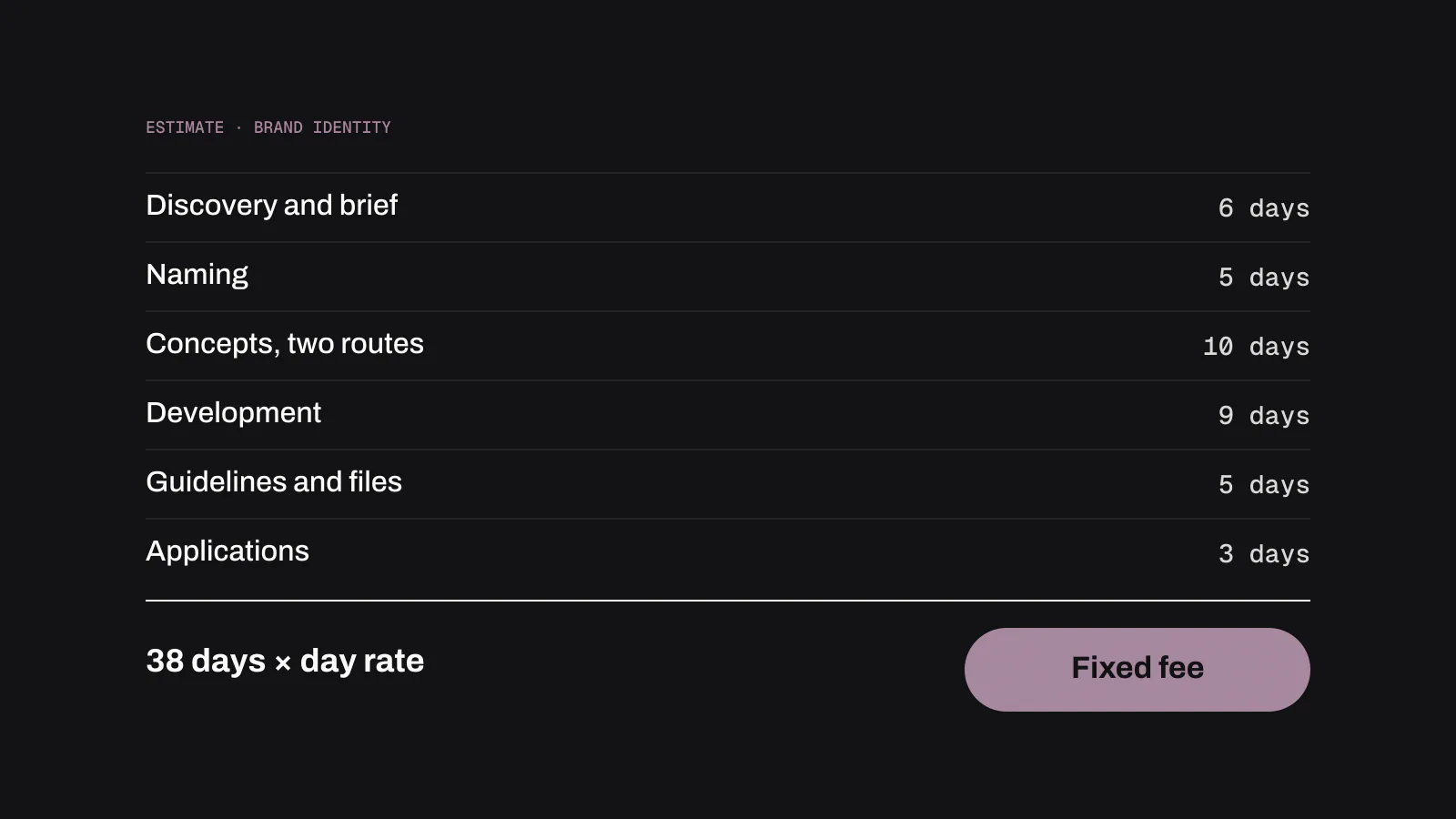
Every estimate we write starts from a day rate. Ours is €920 per person per day in 2026, the same for everyone in the studio, from a junior designer to Sanne or Duarte. A single rate keeps the conversation about the work rather than about who’s doing it, and it saves clients from wondering whether a cheaper person will be swapped in once the project starts.
We don’t bill by the day, though. We use the rate to build an estimate, then quote a fixed fee for each phase.
Fixed fees per phase
A typical brand project has four phases. We estimate each one separately and quote a fee for it before it starts.
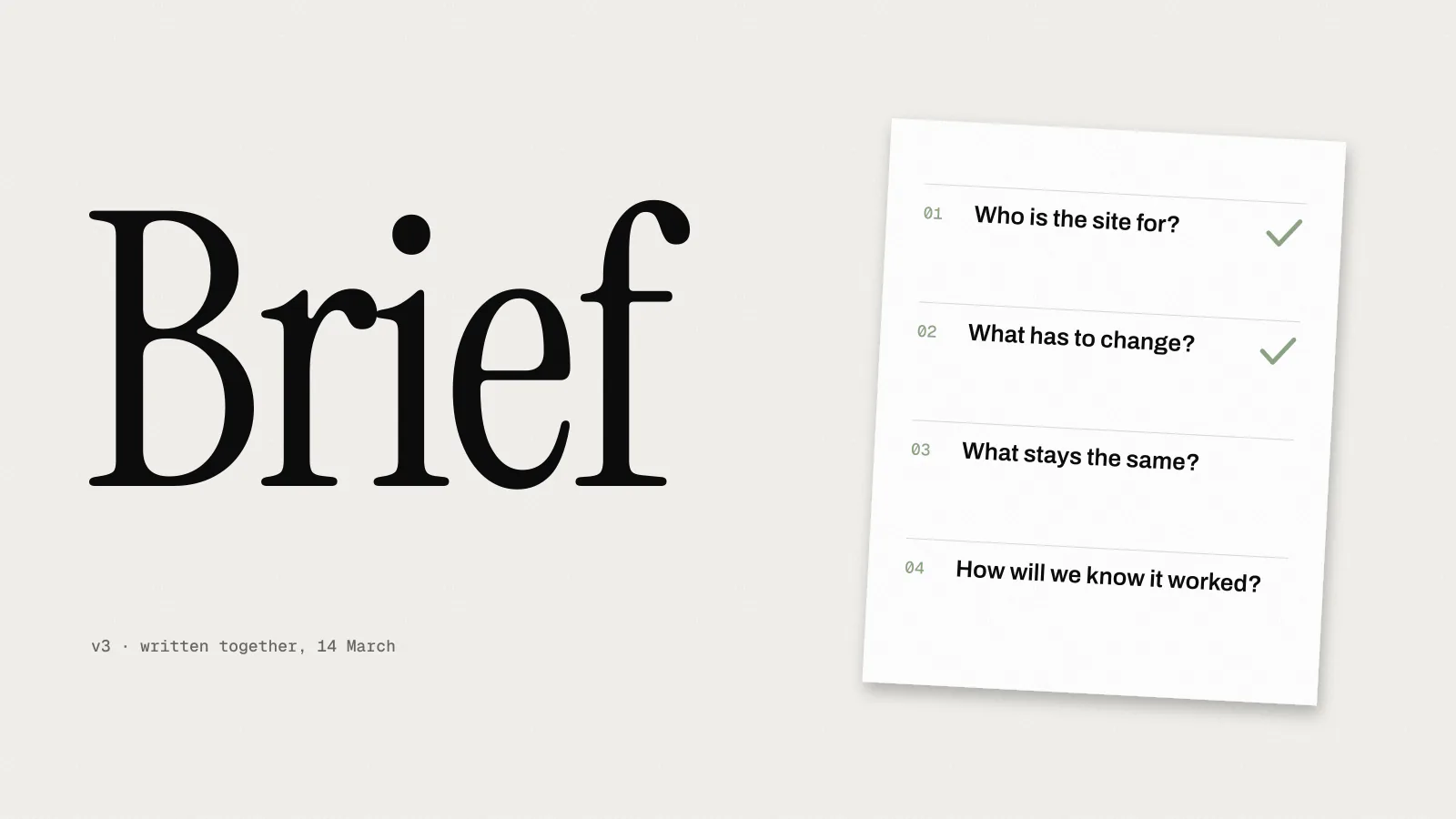
- Brief and research. The briefing session, interviews, a look at the market. Usually 4 to 8 days.
- Concepts. Two or three directions, developed far enough to judge on real applications. Usually 12 to 20 days.
- Development. The chosen direction worked out across everything in scope: logo, type, colour, layouts, key applications. Usually 15 to 35 days.
- Rollout and guidelines. Final files, the guidelines, handover to printers or developers. Usually 6 to 15 days.
The client can stop after any phase and keep what they’ve paid for. In practice almost nobody does, but knowing they can makes it easier for people to start.
What a project typically costs
Adding those up gives a range. For identity projects in the last two years, our fees have looked like this:
- a small identity for a single shop or practice, with a logo, type, colour and a handful of applications: €14,000 to €22,000
- a full identity for a business with packaging or signage, like Pell: €35,000 to €60,000
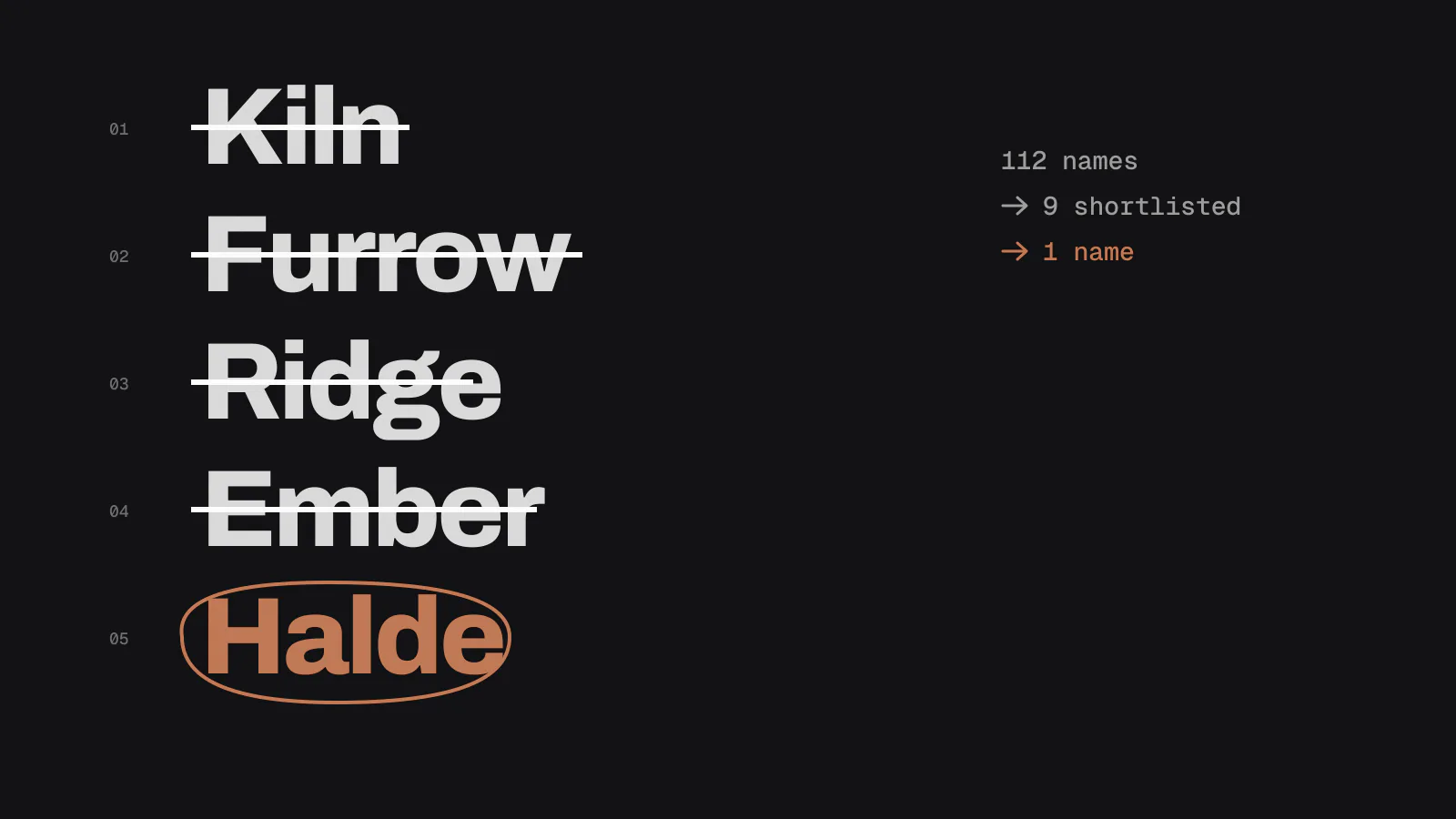
- an identity with naming, a website and broader rollout, like Halde: €60,000 to €95,000
Printing, sign fabrication, photography, font licences and trademark searches are always separate. We quote them alongside our fee so the total is clear, but we pass the costs on without a mark-up and the client pays suppliers directly where they can.
What makes a project cost more
The same few things push a project towards the top of a range:
- Many applications. Fifty packaging variants take longer than five, even with a good system.
- Many decision-makers. Each extra person who has to approve the work adds review rounds. We ask about this early.
- Unclear scope. If the brief is still moving, we price the first phase only and estimate the rest once it’s settled.
- Tight deadlines. We can sometimes compress a schedule by adding people, but it costs more and we’ll say so.
What doesn’t make it cost more is the size of the client. A bakery and an energy cooperative pay the same rate. The scope changes, not the price per day.
Why we share the numbers
We used to keep this information until the proposal stage. Then we noticed how many first conversations were spent circling around budget, with both sides reluctant to say a number first. Now we put our day rate and typical ranges on the website and in the first email.
Telling people the price early is the quickest way to find out whether the project is a good fit, for both sides.
It has cost us some enquiries. A few people see the figures and don’t reply, which is fine. The projects that do go ahead start with an honest conversation about what’s possible within the budget, and that’s usually the most useful conversation in the whole project.
Retainers and smaller work
Some clients want us on hand after launch. We offer retainers in blocks of days per month, from two days upwards, at the same rate. Unused days roll over for one month and then expire, which keeps everyone honest about whether the retainer is still useful.
For small, self-contained jobs, such as a poster, a single sign or a report cover, we quote a fixed price after a short call. The smallest project we’ve done this year was a set of price cards for a cheese shop at €1,800. We like small jobs. They’re often how longer relationships begin.
When the budget doesn’t fit
Sometimes a client’s budget is half of what the scope needs. We’d rather say so than quietly do half the work. Usually we can find a version that fits: fewer applications, guidelines as a short PDF instead of a full site, a phased rollout over two years. Sometimes we can’t, and we recommend someone who works at a different scale. Either way, the client knows where they stand before anyone opens a sketchbook.