Marrow Records
A label identity that sits quietly beside its artists' artwork
An identity for a small Lisbon label that lives on the spine and the back of the sleeve, and a website that makes each release page in an afternoon.
- Client
- Marrow Records
- Year
- 2024
- Services
- Identity, website, art direction
- Team
- 2 designers, 1 developer
- Timeline
- 3 months
The brief
Marrow is a small independent label in Lisbon that releases electronic music and some folk, about eight records a year, mostly on vinyl with digital alongside. By 2024 it had 40 releases and no consistent way of marking them. Some sleeves carried a logo on the front, some on the back, some not at all, and the website was a template that made every release page by hand.
Rita Coelho, who runs the label with two part-time colleagues, was clear that the covers belong to the artists. She wanted the label to be recognisable on a shelf and in a shop’s bin without competing with the artwork.
What we did
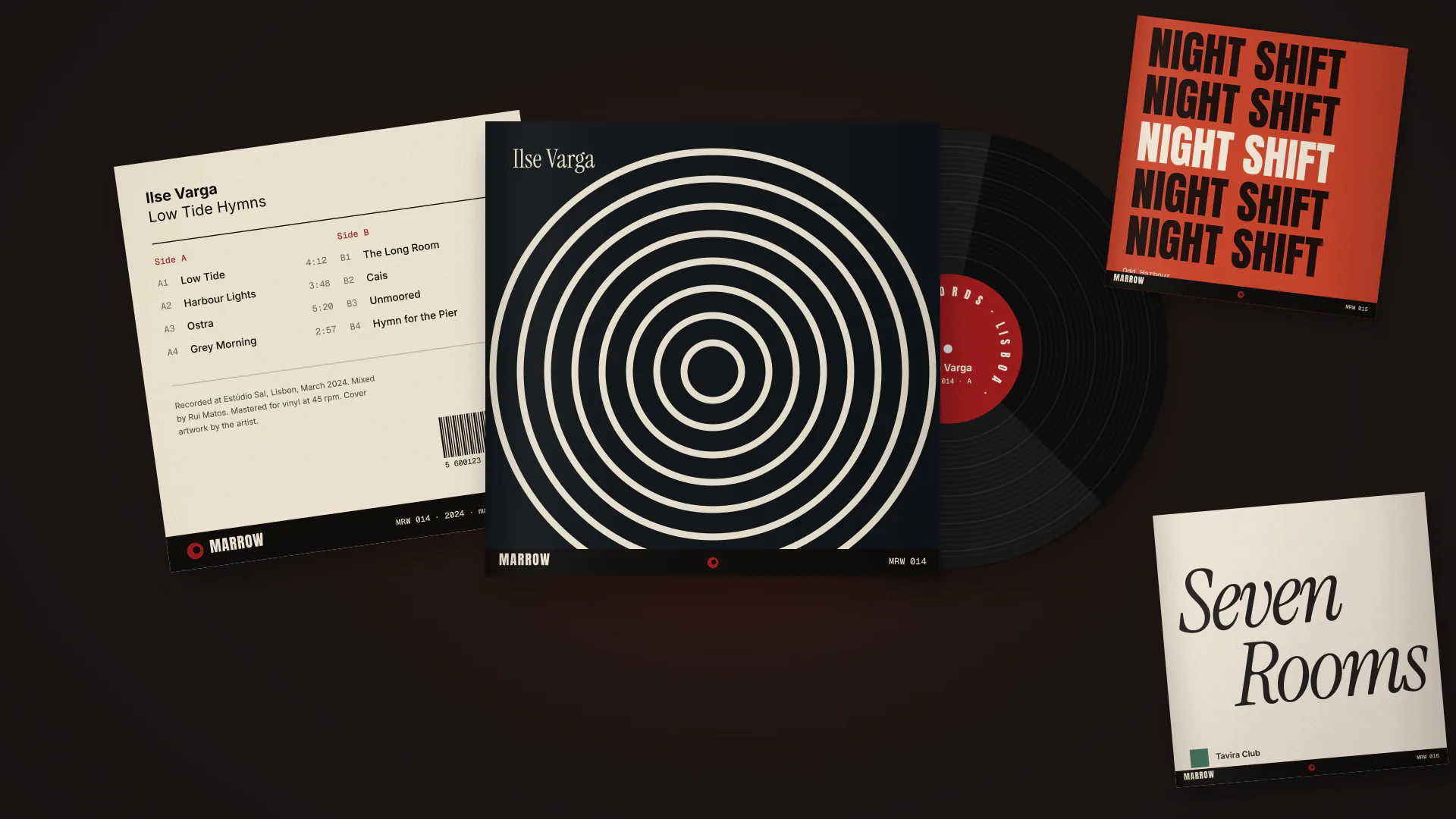
We moved the identity off the front of the sleeve entirely. It lives in three places:
- the spine, with the label name, catalogue number and year
- a thin band along the bottom of the back cover, with the mark and a fixed track-list grid
- the centre label of the record, which uses the same band in a circle
Catalogue numbers became part of the identity. They run MRW001 upwards and are set large on the spine, because that’s what record shop staff and collectors actually use to find things. A row of Marrow records on a shelf now reads as a run of numbers.
For the type we chose a narrow sans serif with a matching mono for the catalogue numbers, both licensed for print and web. The mark itself is a simple wordmark, drawn to work at 6 mm high on a spine.
The website is a small static site. Each release is one file with the artist, title, catalogue number, cover, track list and buy links; the page builds itself from that. Rita adds a release by filling in the file and uploading the cover. We also moved sales from a marketplace to the label’s own shop for vinyl, keeping the marketplace for digital.
What changed
Rita now publishes a release page in about a day, mostly spent writing the notes, where it used to take about a week of back and forth with a freelancer. The back catalogue of 40 releases was moved over in the first month.
Direct sales through the label’s own site rose 52% in the year after launch, mainly vinyl pre-orders. Two Lisbon record shops now file Marrow by catalogue number in its own section, which Rita says she never asked for.
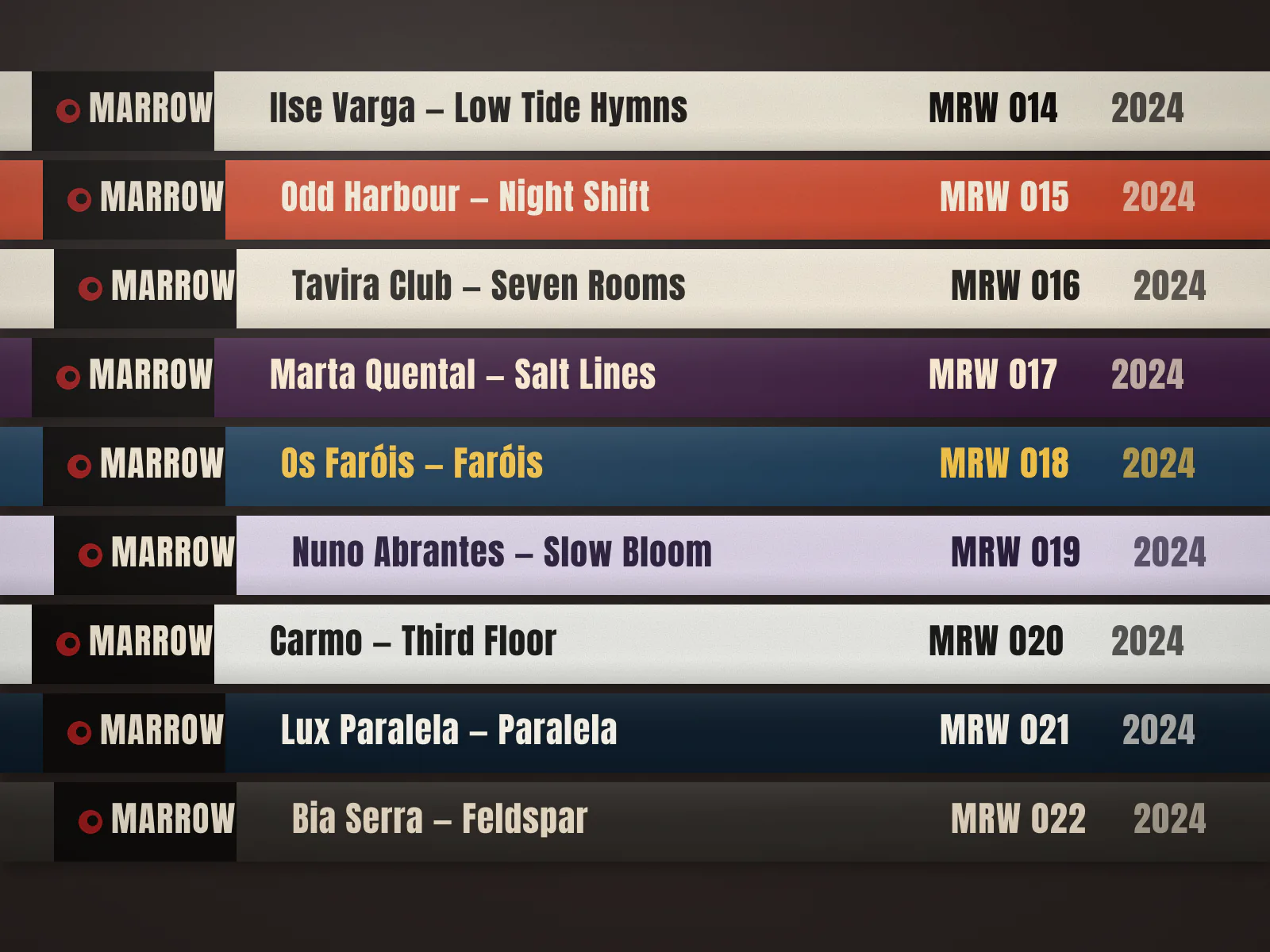
The identity lives mostly on the spine: name, catalogue number, year. 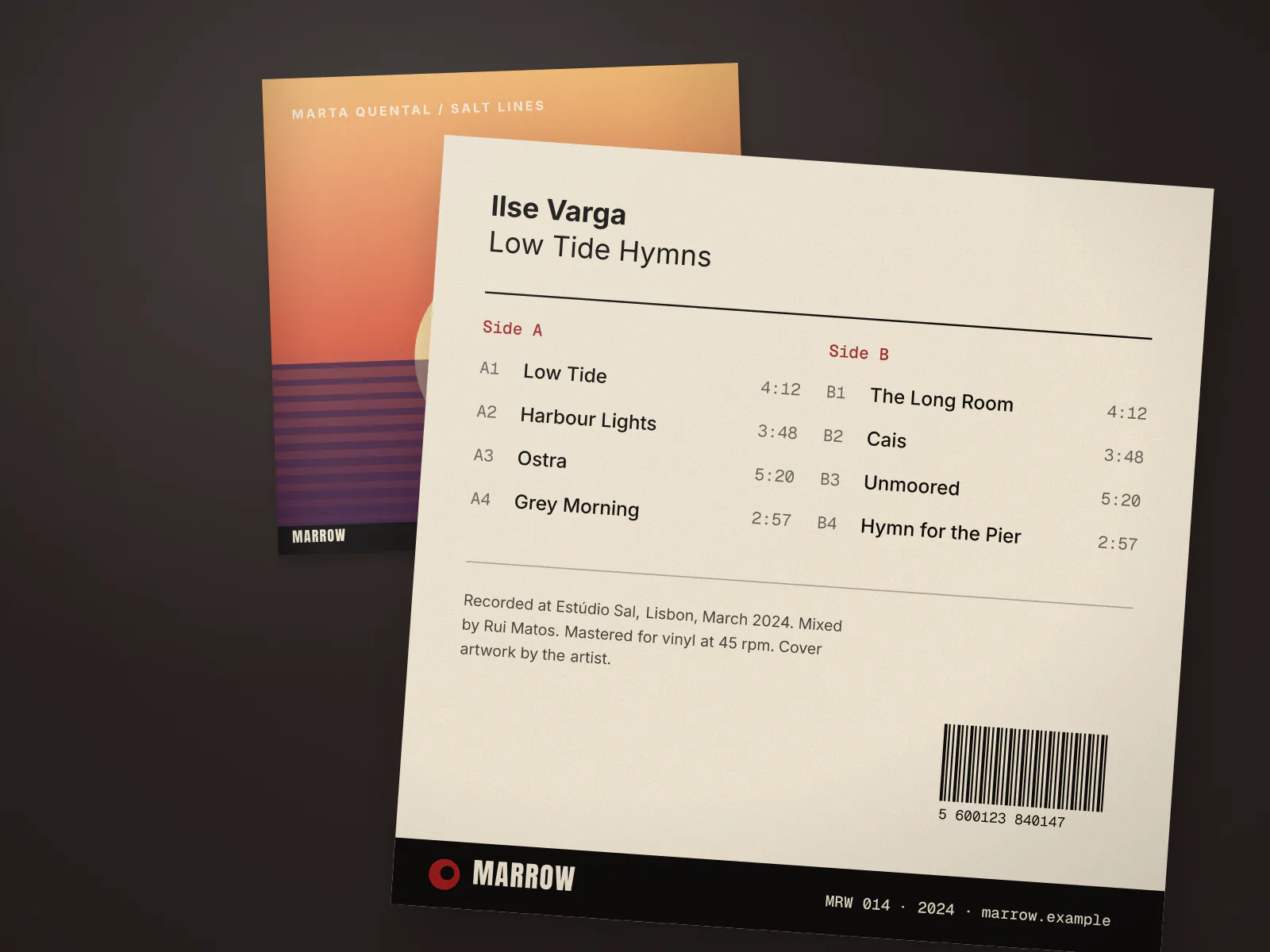
The back of every sleeve uses the same grid, so the catalogue reads as a set on a shelf. 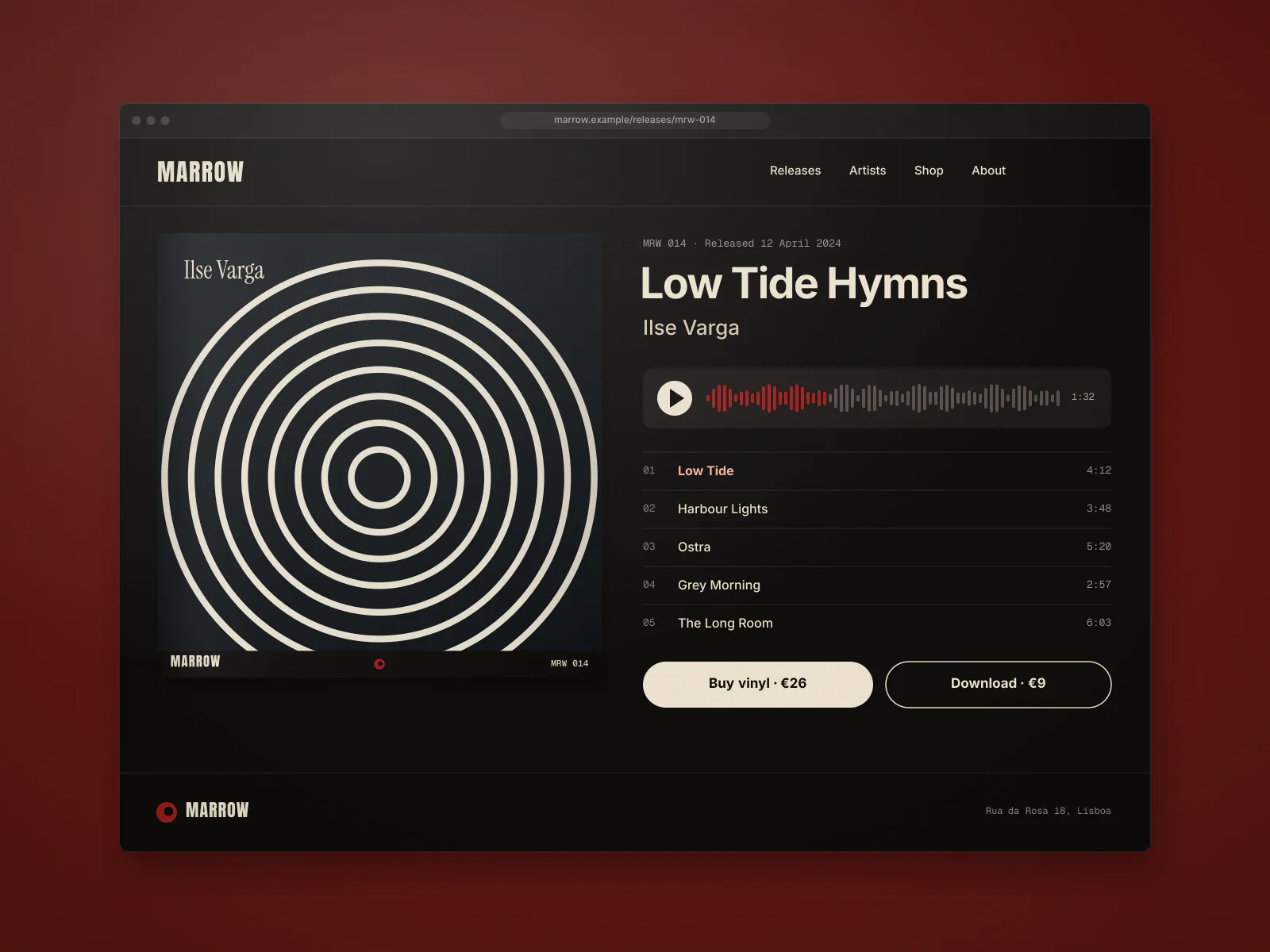
Release pages put the artist's cover first and the label's mark in the footer. 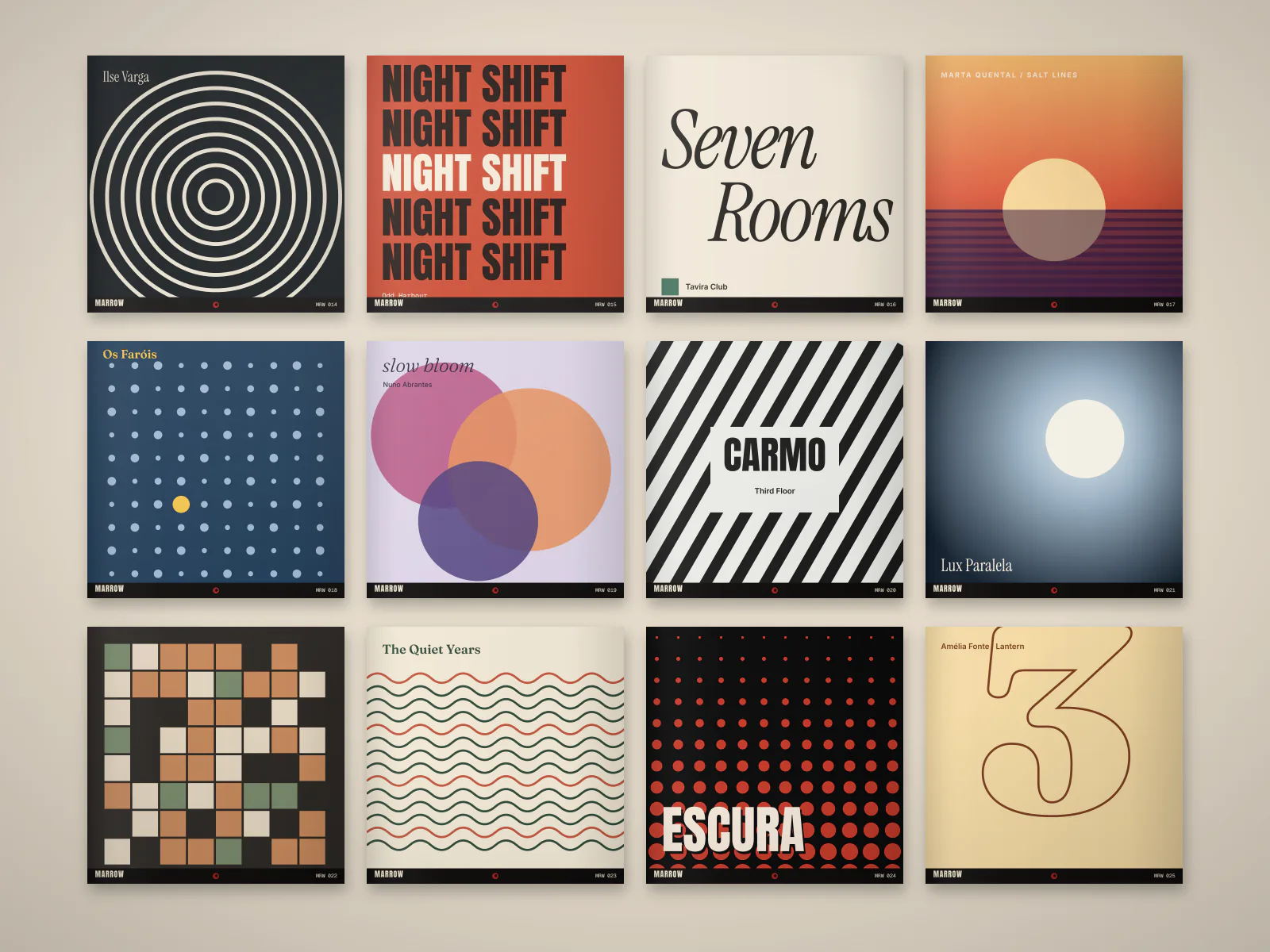
Twelve releases side by side. The covers differ; the band and numbering hold them together.
What changed, in numbers
- direct sales through the label's own site
- +52%
- to publish a release page, down from about a week
- 1 day
- catalogue releases moved onto the new system
- 40
“Every label wants its logo on the front. We didn't, because the covers belong to the artists. Corvel gave us a system that's always there but never in the way, and a site I can update myself on a Sunday night.”